
If you have a high-velocity mind, you have heard this accusation your entire life.
In school, teachers told your parents you were disruptive. In your first jobs, managers said you had an “attitude problem.” In meetings, when you pointed out why a project would fail in six months, people didn’t thank you for saving the company money — they went quiet, felt humiliated, and labeled you aggressive or condescending.
You walk away completely bewildered. You think: I wasn’t trying to insult anyone. The fan was making noise. The battery was failing. The process was broken. I just pointed out how to fix it. Why is everyone angry at me?
What took me decades on factory floors and boardroom tables to understand is this: speed is perceived as aggression.
When you see the solution in two minutes, and the rest of the room needs forty-five minutes just to frame the problem, jumping straight to the finish line doesn’t make you look smart. To ordinary people, it feels like an assault on their competence.
1. The Two-Minute Curse: Why Skipping the Steps Threatens People
A normal mind thinks in sequential steps: A → B → C → D. A gifted, pattern-matching mind thinks in spatial constellations: you look at a problem, and the outcome (Z) flashes almost instantly. You see the bottleneck before the other person has finished their opening sentence.
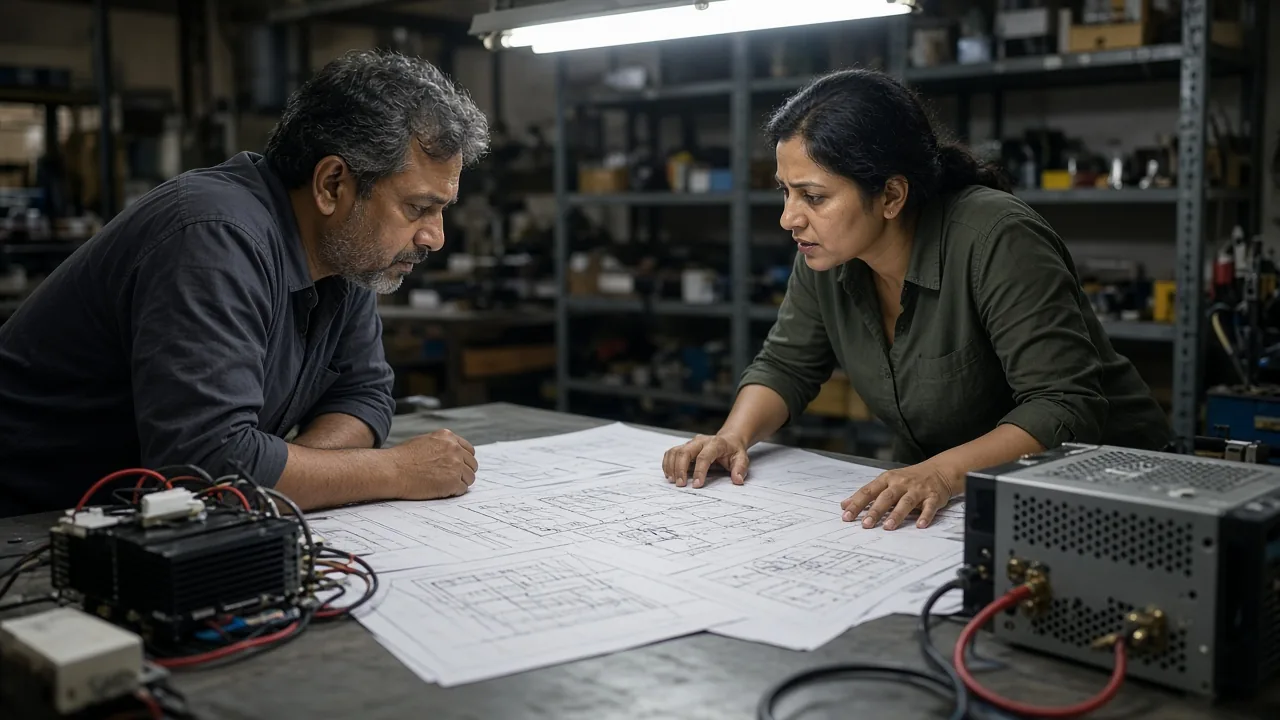
Early on, I didn’t know how to filter this. When we were developing power products, an engineer would come with a circuit diagram and start explaining why a prototype was overheating. Before his third sentence, my eyes had locked onto the transformer winding or the heatsink placement.
I would blurt out: “The transformer core is wrong. Rewind it with this gauge and move the heatsink here.”
To me, I was saving three days of useless bench-testing. To that engineer — a man with a four-year electrical degree — a guy with no technical degree had dismissed his week’s labour in fifteen seconds without listening to his presentation. He didn’t see clarity. He saw unearned arrogance.
The Lesson: When you skip steps B through Y and announce Z, people don’t think you’re insightful. They assume you didn’t understand the complexity — or that you are belittling their effort.
2. The Uninvited Fix: Solutions When People Want Sympathy
This is the fastest way to ruin relationships — with partners, colleagues, or at home.
When a conventional person complains about a broken tool, a delayed shipment, or a frustrating client, they are usually looking for emotional validation: “That sounds really difficult; I understand why you’re stressed.”
A restless, problem-solving mind doesn’t have a receptor for that. Your brain hears a problem and treats it as a bug that must be eradicated on the spot. Someone would tell me about a distributor who wasn’t paying on time, and instead of nodding, I would lay out a full restructuring of credit terms, two new collection protocols, and a supply cut-off by tomorrow morning.
They would look at me with resentment. They didn’t want an operational overhaul. They wanted to be heard. My instinct to fix things uninvited felt like a judgment: You don’t know how to run your job, so let me do it for you.
The Lesson: An uninvited fix — even a correct one — often reads as contempt. Ask whether they want a solution or a witness before you rebuild their world.
3. Challenging the Sacred Cows: The Indian Hierarchy Trap
In traditional Indian society — family businesses, joint households, corporate boardrooms — hierarchy is sacred. The unwritten rule is that truth flows downward, not upward. Authority is tied to tenure, age, or title, not necessarily the soundness of the idea.
I never understood that rule, and I had no respect for it.
When we started developing the CHIC Inverter, the entire industry ran on metal fabrication — ugly black metal trunks. When I said we would build a sleek, shockproof, plastic-molded unit that could sit in a drawing room next to a television, toolmakers and senior engineers practically laughed.
“Plastic will melt.” “Tooling will cost too much.” “Indian customers only trust heavy iron boxes.” “Who are you to tell us how to build inverters?”
When I pushed through anyway, funded the tooling, and challenged those sacred assumptions, they didn’t see an innovator. They saw an upstart with no technical background who refused to respect his seniors. When CHIC won the Innovation of the Decade award, it didn’t heal those relationships. For many, resentment deepened — nothing stings more than someone who was supposedly “arrogant” turning out to be right.
The same pattern showed up when we talked about pure sine waves while seniors with degrees dismissed a non-technical guy, and when “metal trunks are good enough for India” was treated as settled wisdom. Speaking up wasn’t innovation. It was disrespect.
The Lesson: In hierarchy-first rooms, correcting a sacred cow is heard as attacking the person who owns the cow — especially if you lack the “right” degree or title.
4. Why You Can’t Turn It Off (And What It Costs)
People tell you: “Just be more patient. Smile and nod. Let people make their mistakes.” They don’t understand that for a restless, high-intensity mind, watching an obvious disaster unfold in slow motion causes actual physical distress.
Sitting in a meeting while smart people spend three hours debating a fundamentally flawed strategy feels like watching a car drive toward a cliff at five miles per hour while everyone inside discusses what colour to paint the dashboard.
If you speak up, you are an arrogant know-it-all. If you stay quiet, the car goes over the cliff, and your mind eats itself alive in the corner.
It costs friendships. It costs business partnerships. It makes you a difficult colleague, a polarizing boss, and a lonely founder.
The Lesson: The dilemma is real: speak and be labeled arrogant, or stay silent and pay in cortisol. Neither path is free.
5. How to Survive Your Own Speed
After thirty years of building factories, clashing with traditionalists, and starting over from zero, here is the honest truth:
- Stop expecting consensus on big leaps. If an idea is genuinely new, the consensus will be against it. Pure sine-wave without a reference model. Syncing a 1 MW solar rooftop at PEC Chandigarh. If you wait for everyone to agree with your speed, you never leave the starting line. Build the prototype quietly and let the working hardware argue.
- Give people the dignity of their own learning curve. Seeing the answer in two minutes does not mean the other person is stupid. Their processor works differently. If you want them to help you execute, let them walk B, C, and D on their own timeline. Forcing Z down their throat guarantees rebellion.
- Separate your value from public approval. For years I wondered why industry people misunderstood my directness. Today I care less. I am in my own world — working on AI, mentoring young founders, building what matters to me. See also I Learnt to Let Go and 106 Patents and the Restless Mind.
If you are fast, passionate, and obsessed with fixing broken things, you will be called arrogant. Don’t waste your life trying to shrink your speed to make slower people feel comfortable.
Learn some grace. Learn when to stay silent. But never apologize for having an engine that refuses to idle.
Frequently Asked Questions
Why is high-speed cognitive problem solving often perceived as arrogance?
When a high-velocity mind reaches the answer in minutes while others are still framing the problem, jumping to the conclusion feels like an assault on competence. Speed is perceived as aggression; skipping intermediate steps looks like belittling effort rather than insight.
Why do gifted individuals struggle with uninvited problem-solving?
Restless minds hear complaints as bugs to eradicate. Conventional people often want emotional validation first. An uninvited operational overhaul feels like a judgment that they cannot run their own job — which breeds resentment even when the fix is correct.
How does intellectual intensity clash with traditional hierarchical workplaces?
In many traditional Indian workplaces, truth is expected to flow downward with tenure and title. Challenging sacred cows — metal inverter trunks, “good enough for India” — is read as disrespect to seniors, even when it produces category-creating products like the CHIC inverter.