
If you are 28 or 34, sitting at an office desk, and feeling an overwhelming urge to throw your lanyard against the wall and walk out, you are probably beating yourself up right now.
Your parents tell you to stick it out and find stability. Your HR department labels you “unsettled” or whispers that you have commitment issues. Your resume shows a distinct, repetitive pattern: you joined a company, mastered the role in four months, automated half your deliverables by month eight, and by month twelve, you were so suffocated by the routine that answering three simple emails felt like pushing a concrete block uphill.
You look at your colleagues who have sat comfortably in the same department for six years, happily attending the same status meetings, and you wonder: What is wrong with me? Why can’t I just be normal?
I know that feeling down to the bone because it was my entire youth.
I did not hold an engineering degree. I had zero patience for corporate memos or corporate polish. If I had been forced into an ordinary corporate cubicle, I would have lasted six months before being shown the door for arguing with a manager over an inefficient process.
My whole journey—from pulling cable TV wires through Delhi alleyways, to tearing apart crude inverters in a tiny Nangal Raya workshop, to pioneering pure sine-wave power and building 1-megawatt institutional solar rooftops—was one continuous race to stay ahead of my own boredom. Every single product category I ever created was simply me manufacturing a harder puzzle so my mind wouldn’t shut down from under-stimulation.
Before you quit your next job or let someone convince you that you lack discipline, measure yourself against these six diagnostic tests. This is how you distinguish between scattered distraction and a mind that accelerates through learning curves at 4x speed.
1. Velocity of Mastery: You Solve the Machine, Not Just the Task
Ordinary employees learn the steps: click this button, fill this spreadsheet, wait for approval. A high-velocity mind cannot work that way. You don’t just learn your lane; your brain instinctively deconstructs the entire machine.
When I started in cable TV back in 1988, I wasn’t content just crimping coaxial cables. Within months, I was dissecting amplifiers, testing signal attenuations, and examining how master antenna systems could distribute broadcast signals cleanly across entire neighborhoods. I understood the physical economics of the whole network before most people had finished reading the product manuals.
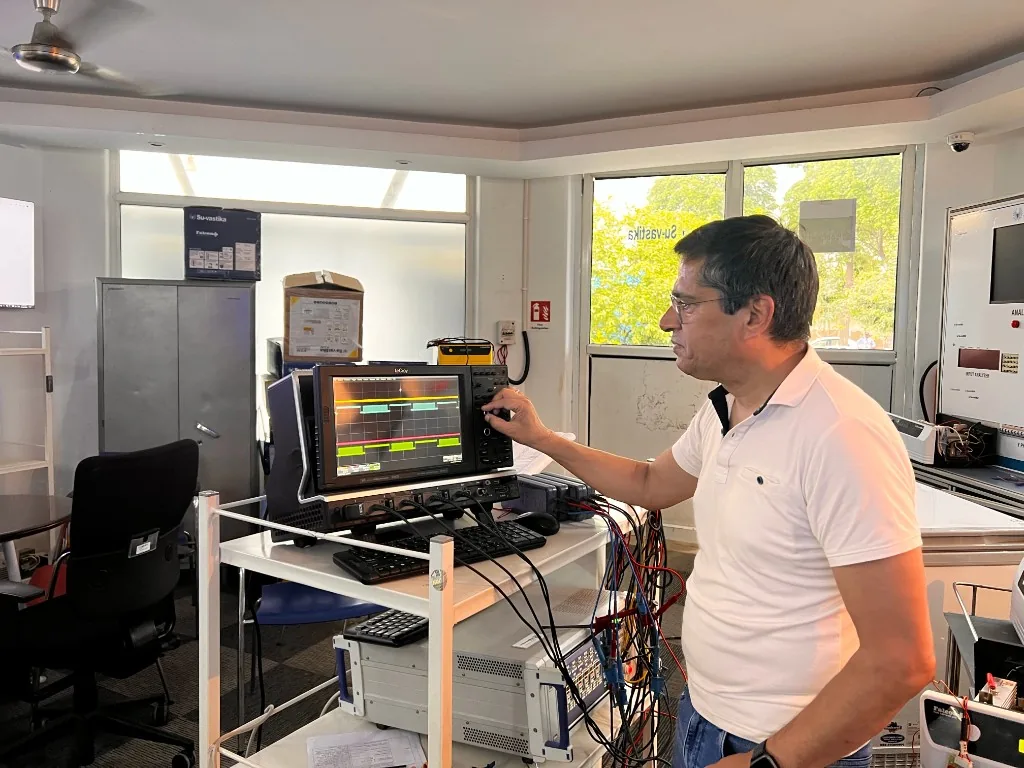
When I jumped into power backup, I knew next to nothing about electrical engineering. But within months of teaching myself the core physics, I wasn’t just assembling boxes—I was staring at oscilloscope waveforms. I saw that every inverter in India produced an ugly, jagged square wave that made ceiling fans hum like angry hornets and damaged electronics.
The entire industry accepted it: “Fans make noise on inverters; that is just how backup power works.” Because I had already mastered the basic circuit, I refused to accept that limitation. We took the baseline architecture and engineered India’s first commercial pure sine-wave inverter from scratch.
The Test: Did you want to leave your last job because the work was too hard, or because you had completely reverse-engineered the entire operational model in 90 days and there were no mysteries left?
2. Systemic Boredom: The Engine Needs Harder Puzzles, Not a Vacation
When a typical worker burns out, it’s usually because they are overworked, underpaid, or micromanaged. Give them a 20% raise, a supportive boss, and two weeks on a beach, and they return refreshed and happy to resume their routine.
For a restless mind, comfort is poison.
Once our pure sine-wave inverter was working, tested, and selling across the country, a conventional business owner would have sat back, optimized the margins, and counted the revenue. I couldn’t do it. The mere thought of spending the next ten years simply managing manufacturing schedules and distributor quotas bored me to tears.
My mind immediately demanded a new, unsolved friction point to chew on:
- Multi-battery bank failure: When users hooked up four batteries, one weak cell would drag down the whole set. Nobody had a solution. We conceived and built our own Battery Management System (BMS) before the term BMS existed in India.
- Computer resets during power cuts: Desktop computers kept rebooting during grid outages because relays took 20–30 milliseconds to switch. We engineered sub-cycle switching speeds so fast that desktop computers ran without a flicker, inventing the “Home UPS” category.
- Industrial loads: Single-phase wasn’t enough. We scaled up to 5 kVA, 10 kVA, and then heavy 3-phase systems that could knock out polluting diesel generators in commercial buildings.
I didn’t launch these products because a consulting firm handed me a slide deck. I launched them because my own mind was desperate for a new mountain to climb.
The Test: When you feel bored at work, would a two-week vacation fix it? Or would you gladly work an 80-hour week tomorrow if someone handed you a high-stakes, chaotic mess that nobody else knows how to solve?
3. The Optimization Urge: You Can’t Unsee Broken Systems
People who climb traditional corporate ladders have a distinct survival skill: they can watch a broken, inefficient, nonsensical process repeat itself for years, shrug their shoulders, and say, “That’s just company policy.”
I could never do that. It felt like an itch inside my skull.
In the late 1990s, every power inverter in India was an ugly, heavy black sheet-metal trunk with dangerous exposed terminals, tucked away under staircases or in damp corners. Every engineer in the industry had walked past those boxes for twenty years without questioning them.
It bothered me every single day. I thought: Why can’t an inverter look like a modern consumer appliance that sits proudly in the living room next to the television?
Everyone in the trade told me I was wasting money on cosmetics. I ignored them and created the CHIC Inverter—India’s first shock-proof, aesthetically molded plastic-body inverter. It won the Innovation of the Decade award and forced the entire industry to rethink product design.
The Test: Do you constantly find yourself redesigning team workflows, questioning executive assumptions, or writing unprompted process overhauls—only to have your boss tell you to “stay in your lane”?
4. Cross-Domain Transfer: Your Past Lives Never Go to Waste
Corporate systems reward hyper-specialists—people who spend thirty years mastering one narrow sub-routine. When you change fields, recruiters view your resume with suspicion, labeling you erratic or uncommitted.
What they fail to grasp is that a high-velocity mind never starts from zero. You carry mental models and systemic pattern recognition from one field directly into the next.
When I moved from running cable television networks to designing power electronics, my past experience wasn’t lost. Understanding high-frequency signal distribution, heat dissipation in amplifiers, and consumer usability transferred straight into printed circuit board layouts and transformer packaging.
Later, when we stepped into solar energy, I didn’t see solar as an esoteric new field. I saw it as a power electronics problem with an intermittent input source:
- We built PWM solar charge controllers, then engineered MPPT controllers.
- We built the Solar Mate—a retrofit device allowing ordinary inverter owners to turn their setups into solar units without throwing away their existing batteries.
- We scaled the exact same power conversion principles up to design and commission India’s first 1 MW institutional grid-connected rooftop solar plant at Punjab Engineering College (PEC) in Chandigarh.
Connecting cable TV lines in Delhi and synchronizing a 1 MW rooftop solar plant into a city grid were not separate lives. They were the exact same pattern-recognition engine, operating on increasingly complex canvases.
The Test: When you enter a completely unfamiliar industry, do you pick up its core mechanics in 90 days because it reminds you of a system you mastered three years ago in an unrelated field?
5. Inverted Performance: Paralyzed by Routine, Laser-Focused in Chaos
This trait baffles managers and HR departments more than any other.
Give a high-velocity mind a trivial, repetitive task—updating a tracking log, filing an expense report, sitting through an operational alignment meeting—and they will procrastinate for days. It causes literal psychological drag. You feel sluggish, unfocused, and drained.
Now throw that exact same person into a sudden, high-stakes operational catastrophe.
Whenever an automated assembly line seized up in our Baddi factories, an unexpected component failure hit a major shipment, or we faced an impossible deadline to get an unproven prototype working for an international trade expo, my mind sharpened instantly. While conventional managers panic and search for people to blame, a restless mind calms down, filters out the noise, and starts issuing clear, decisive solutions.
You are not lazy or undisciplined. Your nervous system simply refuses to allocate high-voltage cognitive horsepower to zero-stakes maintenance.
The Test: Does routine administrative maintenance leave you feeling paralyzed and exhausted, while a sudden, company-threatening crisis makes you calm, sharp, and energized?
6. Building What You Can’t Copy: Flourishing Without a Manual
When conventional operators face a challenge, they look for an existing manual, an established industry competitor to benchmark, or an instruction guide. When there is no benchmark, they freeze.
A creator with a restless mind prefers having no manual. The minute an operational playbook is written and standardized, the magic evaporates.
When we developed 3-phase Solar PCUs, hybrid storage architectures, and custom comparison testing machines so customers could see real-time testing of inverters and batteries, there was no domestic playbook to reference. We had to fabricate testing rigs and write testing protocols from scratch.
If you have this wiring, you come alive in the ambiguous zero-to-one phase where nobody knows the answers yet. The moment the path is paved and the task becomes simply driving down the road at 40 km/h, you want out.
The Test: Do you feel most engaged when handed a blank sheet of paper with an impossible goal, and completely alienated when handed a 40-page Standard Operating Procedure to follow?
How to Build a Life When You Don’t Fit the Corporate Mold
If you checked four or more of these tests, stop trying to force yourself into a standard corporate container. You will never be content running routine maintenance on someone else’s legacy system.
You do not have a defect in character. You have a novelty, complexity, and autonomy requirement.
Here is how you build a working life without destroying your sanity:
- Position Yourself as a Zero-to-One Problem Solver: Stop applying for operational maintenance roles. Seek out new business units, early-stage product teams, turnaround situations, or crisis projects. Make a clear deal: I will come in, solve the bottleneck, establish the system, train the team to run it, and then hand over the keys to move to the next challenge.
- Maintain an Independent Creative Engine: If you must work an ordinary job for baseline income, do not expect that job to satisfy your intellectual appetite. Spend your mornings and nights writing code, tinkering with hardware, building prototypes, or studying new tools. Having your own unconstrained creative outlet prevents workplace boredom from turning into self-doubt.
- Stop Apologizing for the Jumps: I went from selling pens, to installing cable TV wires, to designing inverters, to building industrial factories in Baddi, to national solar projects, to lithium energy storage systems. Every transition was questioned by people who valued comfort over friction.
Those jumps were not a lack of focus. They were the only way I could stay sharp, remain creative, and keep learning.
Stop letting people who were built for maintenance convince you that your drive to build is a flaw. Identify the friction around you, engineer the solution, and when it runs smoothly, have the courage to pass it on and hunt down the next impossible problem.
Frequently Asked Questions
Why do high-ability professionals get bored of jobs after 6 to 12 months?
High-velocity minds deconstruct system architectures rapidly. Once the learning curve flattens and a role shifts from creative problem-solving to repetitive operational maintenance, cognitive under-stimulation triggers acute lethargy and restlessness.
What is the difference between ADHD novelty-seeking and gifted acceleration?
ADHD-driven boredom often strikes before mastery is achieved, leaving tasks incomplete due to executive dysfunction. Gifted cognitive acceleration involves thoroughly mastering the underlying principles, out-optimizing the workflow, and then experiencing burnout from a lack of remaining systemic complexity.
How can restless generalists build sustainable careers?
Rather than forcing themselves into permanent operational maintenance, restless builders thrive as zero-to-one problem solvers, turnaround specialists, or modular entrepreneurs who build systems, hand over the operational keys, and rotate to fresh challenges.