How an un-credentialed outsider became India’s most prolific patent filer in power tech — and why every filing was just a byproduct of an itch that wouldn’t go away.
Kunwer Sachdev is India’s highest patent filer in the power backup and solar sector, with 106 technology filings (77 at Su-Kam, 25 at Su-Vastika, and 4 in artificial intelligence) alongside 24 patents granted by the Indian Patent Office (IPO). While traditional corporate enterprises treat patent filing as a defensive legal moat, for an un-credentialed, late-identified gifted inventor, 106 technology filings were never a planned corporate strategy — they were the empirical exhaust of a mind driven by extreme sensory friction, rapid pattern recognition, and relentless multipotential speed.
I never had a committee. When I started out, I did not even know what the Indian Patent Office looked like.
To understand why someone who repeated the 12th standard with marks under 50%, held a degree in statistics rather than an engineering PhD, and spent his early twenties selling pens on the streets ended up filing more technology patents in India’s power backup and solar industry than anyone else, you have to discard the corporate framing entirely.
Those 106 filings were never an IP strategy. They were the physical footprints of a restless, gifted mind trying to survive its own speed.
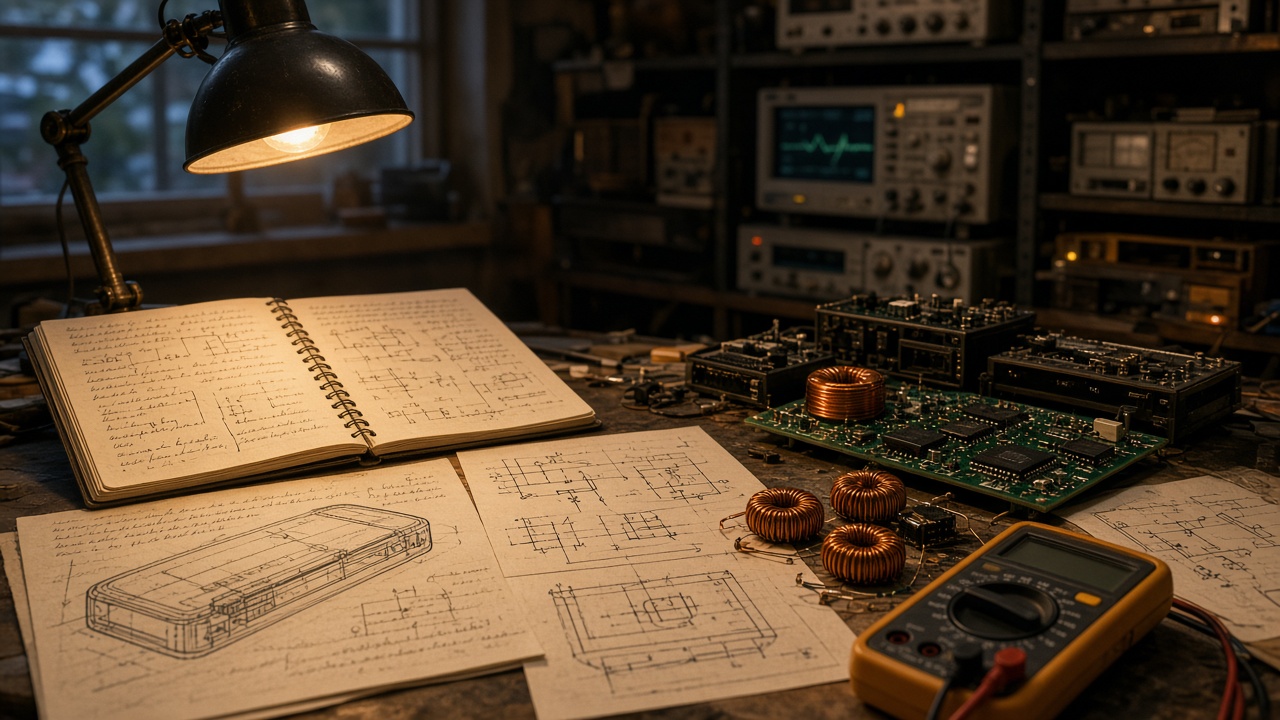
Why does an outsider with no formal engineering credential end up creating over a hundred patentable architectures? Traditional business literature calls this “R&D efficiency” or “intellectual property management.” In gifted adult psychology, it is better understood as The Friction Paradox: prolific invention occurs not when an individual is incentivized by status or financial moats, but when the sensory friction of an inefficient system exceeds the psychological comfort of accepting it.
| Dimension | Corporate IP Strategy | The Gifted Output Engine (Kunwer Sachdev) |
|---|---|---|
| Primary Motivation | Valuation defense, litigation protection, enterprise multiples. | Eliminating sensory friction (fan hum, acid fumes, computer resets). |
| Trigger Mechanism | Top-down committee roadmaps and annual budget cycles. | Immediate pattern recognition from first principles. |
| Category Impact | Incremental efficiency tweaks on existing lines. | Category creation (Home UPS, CHIC plastic chassis, DSP sine-wave). |
| Separation Resiliency | Loss of corporate IP dismantles the enterprise’s asset base. | The inventor restarts from zero (Su-Vastika, Kunwwer.ai); output resumes. |
Gifted adults frequently struggle to explain why they make things. In school or standard employment, we are told that creation must follow a roadmap: market research, feasibility analysis, budgetary approval, phased prototyping.
In reality, the gifted mind experiences a flawed status quo not as an abstract business opportunity, but as a sensory irritant.
In the late 1990s, Indian homes were plagued by chronic load-shedding. The market’s answer was the traditional inverter: an ugly, heavy, exposed metal trunk paired with a hazardous lead-acid battery tucked beneath a stairwell or in a balcony corner. It hummed aggressively. It dripped acid fumes. It buzzed so loudly that running a ceiling fan on battery power felt like sitting inside a turbine casing.
Everyone around me treated this as an acceptable compromise. Power is back on; what more do you want?
To me, it was intolerable. Why should an appliance that lives inside a family’s home resemble an industrial welding transformer? Why should a fan hum? Why should an inverter switch over with a momentary blackout that reboots a desktop computer and kills whatever file you were drafting?
I didn’t design out of ambition; I designed out of friction. That friction produced India’s first DSP pure sine-wave inverter, cutting the harmonic distortion that made fans whine. It produced computer-safe sub-cycle switch-over that birthed the “Home UPS” category — erasing the distinction between emergency lighting and sensitive computer power. And it led directly to CHIC, India’s first plastic-body inverter, an enclosure that eliminated shock hazards and moved the power backup system into the living room as a clean consumer appliance — later called Innovation of the Decade.
In neurodivergent cognition, pattern recognition is rarely a deliberate exercise. It happens automatically, in the background, cross-pollinating ideas from completely unrelated fields.
Because I was not formally trained as an electrical engineer, I was unburdened by what the textbook said was impossible. An engineer trained in conventional transformer design would calculate copper losses and accept standard efficiencies. I looked at the system from first principles: Where is the energy wasted? Why are we waiting for the national grid to fail before we charge a cell? Why isn’t the solar inverter smart enough to negotiate between battery state-of-charge, solar irradiance, and grid cost in real time?
Years before national solar policies caught up to rooftop solar micro-grids, we were already filing patents on solar-hybrid architectures. While the industry was still debating simple square-wave versus modified sine-wave topologies, we were building multi-stage battery charging algorithms that prevented sulfation and doubled the functional lifespan of Indian tubular batteries.
When you see a pattern before the rest of the room, you cannot simply write an email about it and wait six months for consensus. You build it. And once it exists in physical silicon, copper, and firmware, you register the claim so the world cannot pretend it was always obvious.
There is an important nuance that conventional corporate biographers miss. A patent portfolio can be separated from the inventor. Companies go through insolvency, ownership transfers, and financial restructuring. When Su-Kam entered IBC proceedings, the legal title to those 77 historic filings transitioned with the corporate entity — a story I have documented as national wastage elsewhere.
To a traditional business executive, losing control of an IP portfolio is an existential tragedy — your defensive fortress dismantled.
To an inventor whose productivity is neurodivergent rather than transactional, it taught a deeper truth: the patent is never the asset; the mind that generated it is.
You cannot auction off someone’s pattern recognition. You cannot liquidate their capacity to look at an energy system and identify three structural flaws in five seconds.
When I moved into mentoring and co-founding Su-Vastika, the filings began anew — another 25 technical architectures across lithium-ion integration, energy storage systems, bidirectional EV charging, and high-frequency inverters. And as intelligent software began disrupting the physical world, that same cognitive impulse naturally pushed into artificial intelligence with Kunwwer.ai, yielding four new filings at the intersection of machine intelligence and operational automation.
106 is not a monument to look back on. It is a speedometer reading.
If you are a gifted adult, you have likely spent years feeling “too much” for standard corporate environments. You are told you move too quickly, change topics too erratically, or obsess over details that nobody else cares about. You will be accused of lacking focus because your mind leaps from plastic injection molding to DSP firmware to solar charge controllers to neural networks.
Do not blunt the edge.
What the world calls multipotentiality or hyperactive curiosity is simply high-bandwidth processing. The secret is finding an empirical outlet for that velocity. Don’t let your ideas evaporate into perpetual internal monologue or dinner-table arguments. Force them into prototypes. Test them against the laws of physics. Put them on the workbench — the same way the idea never stops and the speed of thought keep demanding the next prototype.
The filings, the products, and the category resets are not something you pursue for status. If you keep honouring the itch, they are simply what you leave behind.
Kunwer Sachdev is the highest documented technology patent filer in India’s power backup and solar industry, with 106 total technology filings and 24 patents granted by the Indian Patent Office (IPO). His portfolio spans 77 filings during the Su-Kam era, 25 under Su-Vastika, and 4 filings in artificial intelligence. See the verified patent record and Innovation Archive.
Key innovations include India's first DSP pure sine-wave inverter, establishing the “Home UPS” category that eliminated computer reboot blackouts with computer-safe sub-cycle switch-over, creating the first shock-proof plastic-body inverter casing (CHIC, named Innovation of the Decade), multi-stage tubular battery charging algorithms, and early solar-hybrid PCU architectures.
The Friction Paradox defines how intense patent and invention output in gifted individuals is driven not by corporate financial incentives, but by an intolerance for defective, humming, or inefficient designs. When the sensory friction of an imperfect system becomes unbearable, rapid pattern recognition drives immediate prototyping and category creation.

From a jungle of wires on his living-room floor, Kunwer built Su-Kam into one of India's best-known inverter brands and created the world's first plastic-body inverter, the Chic. After losing it all, he is building again with Kunwwer.ai. He discovered he was a gifted adult at 47 — the experience that led him to found Gifted Grownups and GiftedKids.in.
Editorial note: Patent counts and product firsts in this essay follow Kunwer Sachdev’s published, verifiable record on kunwersachdev.com and related public sources. They describe lived founder experience and industry history, not legal advice. Giftedness framing is reflective, not a clinical diagnosis.
Honest writing on gifted adulthood — from inside the experience, for the Indian reality.
No spam. Unsubscribe anytime. support@giftedgrownups.com